Noise and Reverberation in Restaurants: How to Control Them
Noise and reverberation in restaurants are topical issues: on one hand, customers often complain about decibel levels that are too high or excessively low; on the other hand, some restaurateurs want warm and noisy environments, while others prefer quiet rooms to attract the right clientele; finally, critics take their auditory perceptions into account when they set out to write their reviews.
Excessively high noise levels in restaurants can have several causes; the main one is certainly modern furnishings, characterized by hard surfaces on which
sound reverberation is particularly significant. Other causes include open kitchens, live music, and crowded spaces where diners are seated at tables that are practically touching each other.
Restaurateurs often desire a noisy environment, as they consider it a sign of their venue’s popularity and productivity. Noise is exacerbated by the voices of people trying to speak loudly enough to be heard and understood. This aspect is considered the primary
source of noise in a restaurant.
Noise is often included in reviews
As previously mentioned,
a growing number of reviewers include noise in their evaluations. In fact, many of them even bring decibel-measuring instruments with them,
subsequently including the noise level in the review, alongside the quality of the food, service, and other factors.
Food critics are not the only ones;
users are taking matters into their own hands with readily available smartphone apps, publishing their reviews on websites.
Controlling noise and reverberation in restaurants
Having a restaurant with high ceilings and modern furniture made of metal, glass, wood, and other exposed solid materials can certainly seem charming; however, these are the very elements that allow
sound to bounce and
reverberate. It is therefore necessary to adopt
solutions capable of addressing the problem of
restaurant reverberation; these are becoming increasingly important, even though they are often only implemented at a later stage, when the structure already exists.
It is not surprising that acoustics are gradually becoming a primary component in
building design.
Furthermore, manufacturers of acoustic solutions offer a wide range of products, created sustainably and with a focus on design and aesthetics. Acoustics depend on a variety of factors, including the shape and size of the environment in question, the materials used, and where and how they are positioned. However,
sound-absorbing materials alone cannot influence noise or reduce sound transmission; they absorb and reflect sound at different levels and degrees.
To analyze the level of reverberation in restaurants, acoustic technicians begin their evaluations by calculating the
reverberation time, for example by varying the number of tables present. These calculations, along with those relating to the size and shape of the space, allow them to determine the most useful products to achieve the dBA level. The main objective is to improve speech intelligibility, which is achieved by using
sound-absorbing materials and reducing reverberation.
When evaluating and designing
acoustics for a restaurant, technicians must take into account that noise levels increase and decrease throughout the day and, naturally, during the restaurant’s operating hours.
They usually consult with all parties involved, including, if possible, the architect who designed the structure. They analyze the ceilings and walls, as well as every other element in the room, to find which
sound-absorbing solutions are most suitable; they also study where to position them to minimize reverberation within the restaurant.
Sometimes, the simplest solution would be to decrease the number of tables, but for financial reasons, this is often not possible. The shape of the room allows for an understanding of how sound travels within it and, therefore, how it propagates. Therefore, ideally,
the positioning of acoustic materials is specifically designed for each room and is based on how sound moves through that specific space. In other words, there is no one-size-fits-all solution.
Implementing acoustic absorption strategies can be complicated. If implemented correctly, these solutions aimed at reducing reverberation in restaurants will improve speech intelligibility; in fact, if they were present in excessive quantities, the space would seem dead; too little, and customers would complain about the significant noise level. Different individuals perceive noise levels differently: young people tend to gravitate toward noisier environments than they do as they age.
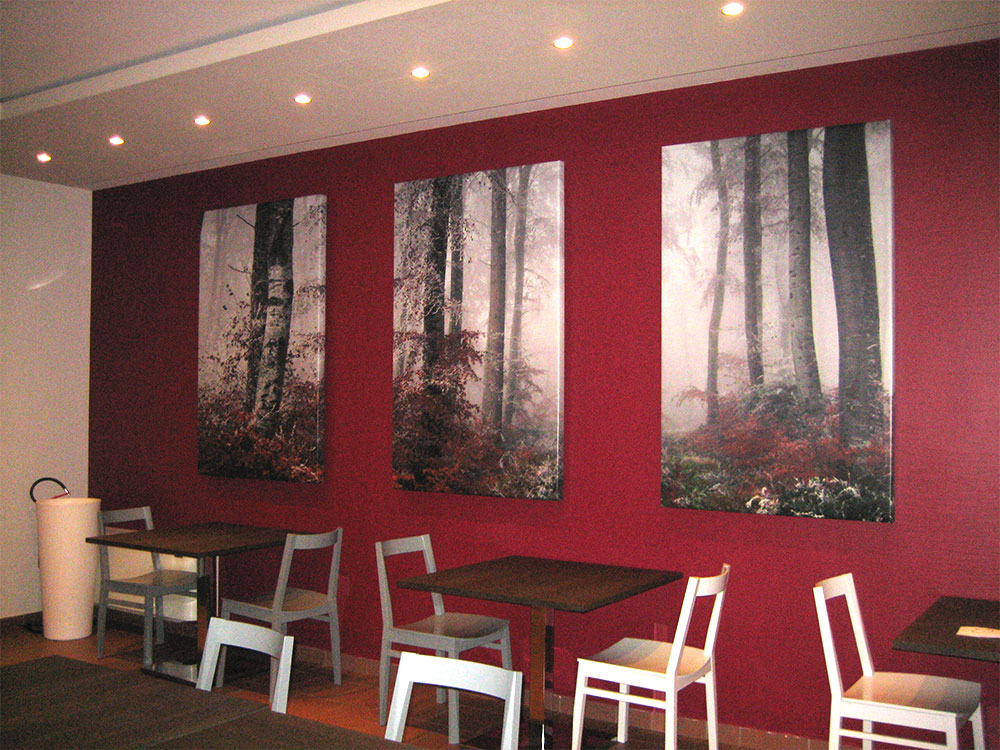
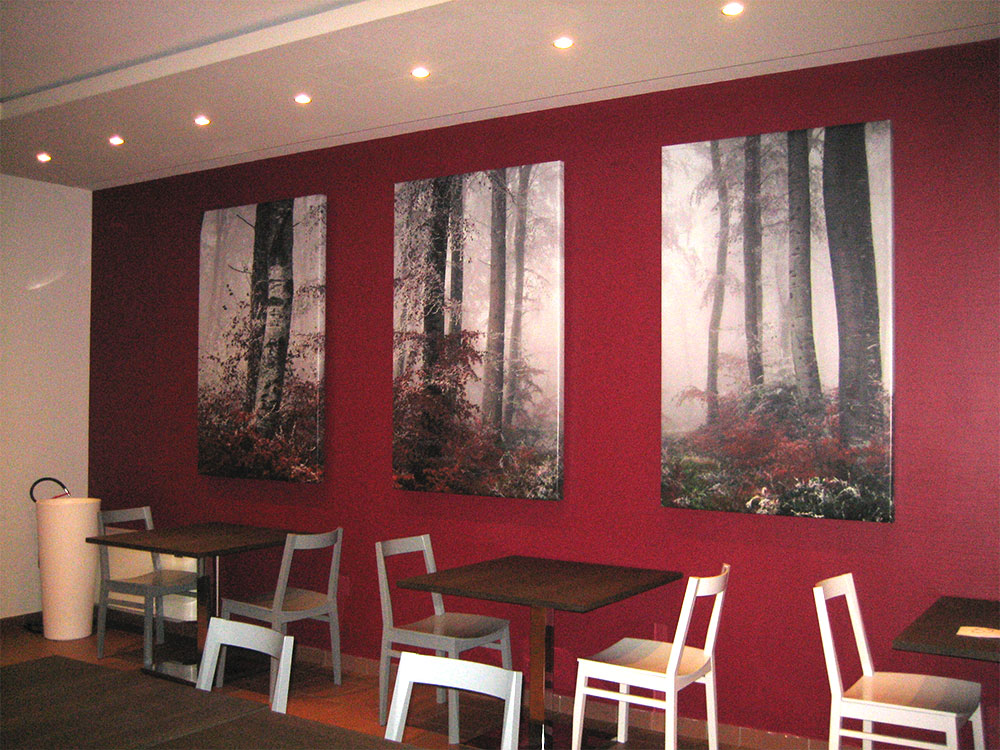
Many companies offer panels made of
efficient and sound-absorbing materials which, if positioned correctly (on at least two surfaces, such as the ceiling and a wall), will prevent sound waves from bouncing back and forth both horizontally and vertically.
If noise and reverberation in restaurants are a problem,
owners have attractive, effective, and affordable acoustic treatment options for their environments. Manufacturers and acoustic consultants are well-prepared to provide technical and installation guidance, reducing implementation costs and maximizing the final result.