Acoustic Treatment for Recording Studios

Many prominent recording studios have established themselves over time thanks to the sound quality they have managed to achieve. Although recording engineers and instruments play a significant role, there is one factor that outweighs the other two in importance: acoustic treatment. One of the reasons recording studios have achieved high acoustic standards is through the assessment and management of the space’s strengths and weaknesses by implementing specific acoustic treatments. While home recording continues to thrive and small-scale studios become increasingly common, what must those building or upgrading their studios do today to ensure they get the most out of their environment?

Why is acoustic treatment important?

In most cases, the primary intent of a recording session is to capture sound performances as accurately as possible. Unwanted acoustic effects can lead to excessive effort in creating the ideal sound. Similarly, a recording engineer is immediately disadvantaged if the audio requires additional work to compensate for acoustic issues and ambient noise within the room. In fact, every surface within the room influences the movement of sound waves. Due to their size and the materials used in their construction, many acoustically untreated spaces will cause unwanted reverberations, flutter, inadequate frequencies, standing waves, and modulation issues. With efficient treatment, however, the quality of recordings and mixes will not only be improved, but the acoustic shape of the room can also be controlled and managed for different types of performances. These are the main reasons why acoustic treatment in a recording studio is so vital. For example, installing polyurethane foam increases the amount of sound absorbed, reducing reverberations created by hard surfaces and consequently increasing the overall sound level. This type of solution, however, is not suitable for every room or environment.
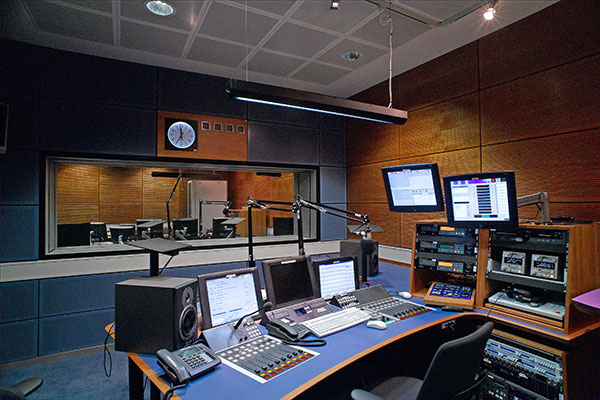
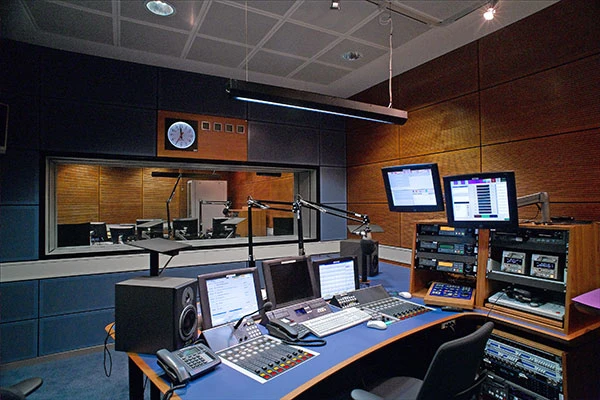
marvinacustica acoustic treatment

Soundproofing and acoustic treatment: the difference?

Initially, it can be easy to confuse these two terms. Both are very important and play different roles in the design of a recording studio. When soundproofing a room, the intention is to isolate it from external sounds. Often, the materials required for soundproofing are installed during the construction phase of the room’s walls, with the aim of preventing sound from entering or exiting. In this case, therefore, the room is acoustically isolated, but the propagation of acoustic waves within it is not controlled. Although acoustic treatment does not help isolate a specific space from the external environment, it allows for the manipulation of acoustics by minimizing echoes and inconsistencies, thereby improving overall sound quality. In fact, a music track has better quality if recorded in an optimized space rather than being played with professional instruments in an untreated environment.

Some types of Acoustic Treatment offered by MarvinAcustica

Sound corner traps – Acoustic Traps

They are positioned in the corners of the room and serve to absorb low frequencies. Usually, two types of acoustic traps are used: porous and resonant. The former are made of foam or fiberglass and are used to effectively absorb mid and low frequencies. The latter, on the other hand, are placed near the walls to absorb specific low frequencies.

SoundsorbaSound-absorbing panels

Wallsorba They are similar to sound corner traps but have a lower thickness, making them less effective for lower frequencies. They are often placed directly on the walls to prevent the formation of unwanted echoes. They are made of fireproof mineral wool. Cloudsorba This type of sound-absorbing panel is suspended horizontally from the ceiling to minimize the natural reverberations of rooms, especially those with high ceilings. Polyurethane Foam Polyurethane foam is designed to reduce airborne sound waves by increasing air resistance. In practice, it converts dispersed energy into heat. Depending on the requirements of each specific room, the foam is cut into different shapes and strategically placed on the walls and ceiling to maximize absorption and control acoustic reverberation as much as possible. Sabine’s formula is very useful for determining the degree of acoustic treatment required and for studying the best positioning of sound-absorbing elements within the room. It should always be kept in mind that possessing professional instruments does not ensure an optimal recording level if the environment has not been acoustically treated. Discover all Marvinacustica solutions for recording studios  
togel4d
toto slot
slot qris
slot777